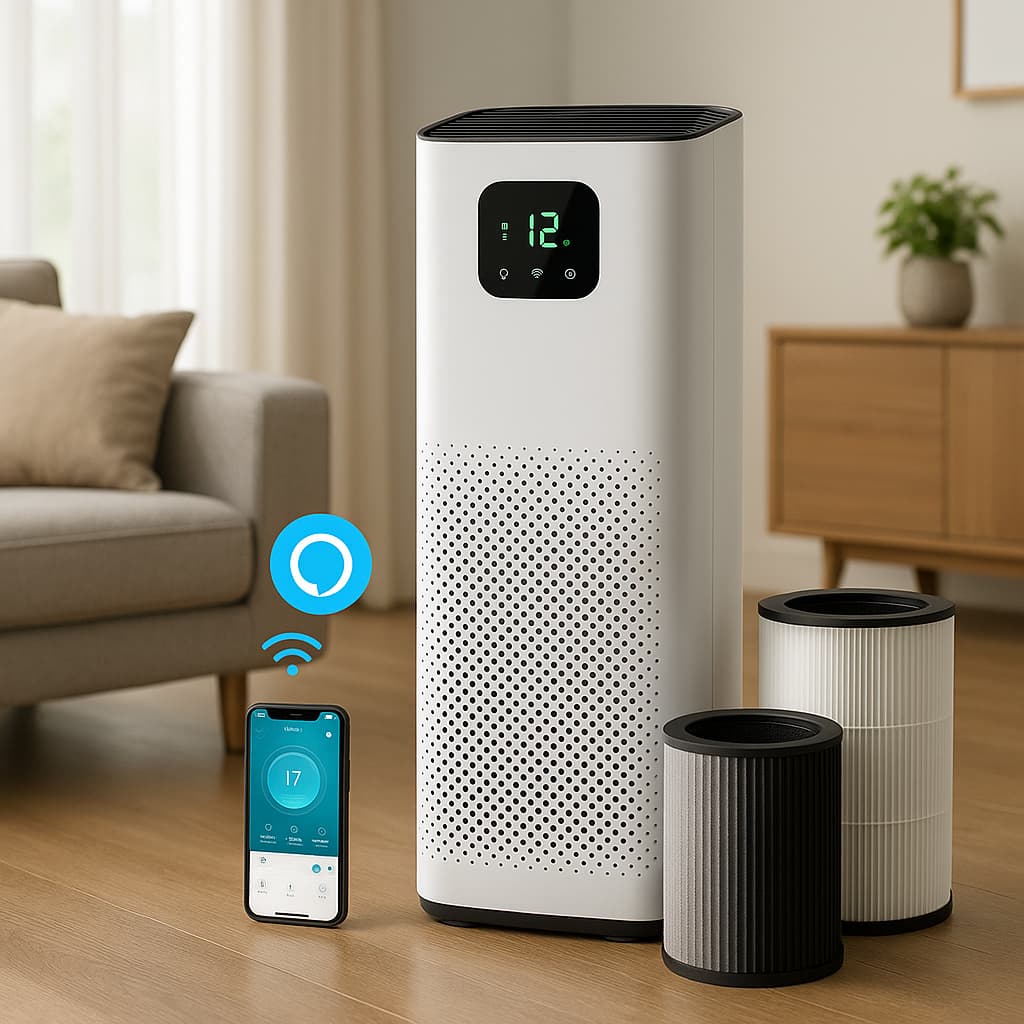
Office air purifiers are easiest to compare when coverage, filter upkeep, sound, and placement are treated as practical workplace decisions. Start with LeStallion's shortlist of best office air purifiers, then use this guide to check the details that matter after delivery.
Start with room size and real airflow
An office air purifier should be chosen for the room it will actually serve, not for the most impressive number on the box. Measure the room, note ceiling height, and think about how air moves around desks, doors, partitions, windows, and printers. CADR and coverage claims are useful only when they match the workplace layout. A small purifier may help a private office, while an open area may need a larger unit or several smaller units placed where people actually spend time.
For 5 best office air purifiers, make the review specific: stand in the room, note where people sit, find the outlet, listen for existing background noise, and picture the filter change. A good purifier should be powerful enough to matter and simple enough that the office keeps using it.
Understand filter roles before comparing features
HEPA-style filtration, true HEPA filters, pre-filters, and activated carbon each solve different problems. Dust and fine particles need strong particle filtration. Food smells, printer odors, and general office smells need carbon support. A washable pre-filter can protect the main filter from larger debris. Buyers should look at the whole filter stack and replacement schedule, not just the headline promise of cleaner air.
For 5 best office air purifiers, make the review specific: stand in the room, note where people sit, find the outlet, listen for existing background noise, and picture the filter change. A good purifier should be powerful enough to matter and simple enough that the office keeps using it.
Keep noise comfortable for focused work
An air purifier that is too loud will be turned down or turned off. Check noise levels at the speeds employees are likely to use during calls, writing, and meetings. A quiet low setting is helpful, but the unit should also have enough power to refresh the room after lunch, cleaning, or a busy meeting. The best office choice balances useful airflow with a sound profile that disappears into the background.
For 5 best office air purifiers, make the review specific: stand in the room, note where people sit, find the outlet, listen for existing background noise, and picture the filter change. A good purifier should be powerful enough to matter and simple enough that the office keeps using it.
Place the purifier where air can move
Placement can make or break performance. Avoid trapping the unit under a desk, against curtains, behind storage boxes, or directly beside a wall if the intake or outlet needs clearance. The purifier should be easy to reach for filter changes and not blow directly into someone’s face all day. Good placement feels boring: stable, open, plugged into a safe outlet, and unlikely to be kicked, blocked, or unplugged.
For 5 best office air purifiers, make the review specific: stand in the room, note where people sit, find the outlet, listen for existing background noise, and picture the filter change. A good purifier should be powerful enough to matter and simple enough that the office keeps using it.
Plan filter costs and responsibilities
Replacement filters are the real long-term cost of an office air purifier. Before buying, check filter price, availability, replacement interval, and who will monitor the indicator light. If nobody owns the task, the purifier becomes a decorative fan with an old filter. Put the replacement schedule on a calendar and keep at least one spare filter if the office depends on the unit every day.
For 5 best office air purifiers, make the review specific: stand in the room, note where people sit, find the outlet, listen for existing background noise, and picture the filter change. A good purifier should be powerful enough to matter and simple enough that the office keeps using it.
Be realistic about odors and expectations
Air purifiers can help with dust, stale air, and some odors, but they are not a substitute for cleaning, ventilation, or source control. Strong food smells, chemical odors, and moisture problems need practical fixes first. The purifier should support a healthier-feeling workspace, not carry the whole burden of poor housekeeping, blocked vents, or ignored trash routines.
For 5 best office air purifiers, make the review specific: stand in the room, note where people sit, find the outlet, listen for existing background noise, and picture the filter change. A good purifier should be powerful enough to matter and simple enough that the office keeps using it.
Match features to office habits
Auto mode, timers, lockable controls, filter indicators, and display dimming can all be useful in an office. But features should match behavior. If employees share a meeting room, simple controls are better than a complicated panel. If the purifier sits in reception, a clean look matters. If it runs near desks, a dim display and quiet mode may matter more than app control.
For 5 best office air purifiers, make the review specific: stand in the room, note where people sit, find the outlet, listen for existing background noise, and picture the filter change. A good purifier should be powerful enough to matter and simple enough that the office keeps using it.
Review performance after the first month
After a few weeks, ask whether the room feels fresher, whether dust is reduced, whether the sound level is acceptable, and whether the filter is easy to access. Move the unit if airflow is blocked or if people keep lowering the fan speed. A short review turns the purchase from a hopeful appliance into a maintained part of the office environment.
For 5 best office air purifiers, make the review specific: stand in the room, note where people sit, find the outlet, listen for existing background noise, and picture the filter change. A good purifier should be powerful enough to matter and simple enough that the office keeps using it.
After room size, sound, placement, and filter responsibility are clear, return to LeStallion's comparison of the best office air purifiers to match the final product choice to the workplace.
Practical office buying checklist
Before choosing a model, write down room size, number of employees, normal door position, nearby odor sources, printer location, cleaning schedule, and whether windows or HVAC already move air well. Then compare purifiers by useful airflow, filter quality, replacement cost, and sound at realistic speeds. A balanced unit that employees tolerate every day usually beats a powerful unit that is too loud for normal work.
Think about how the purifier will fit into office routines. The power cord should not cross a walkway. The filter door should open without moving heavy furniture. The controls should be simple enough that a visitor or new employee cannot accidentally disable the unit. If the purifier has a bright display, make sure it will not distract in a dark meeting room or video-call corner.
Maintenance and workplace trust
Air quality purchases can create expectations, so communicate honestly. Say that the purifier supports dust and odor control, not that it guarantees health outcomes. Keep the copy practical: cleaner-feeling air, easier maintenance, and better comfort. Avoid medical claims unless the manufacturer provides clear, relevant evidence and the office has a professional reason to document that standard.
Set a recurring filter check. Wipe exterior vents, vacuum the pre-filter if the manual allows it, and record filter changes in a simple note. If the office changes layout, review placement again. New partitions, storage cabinets, or desk clusters can block airflow that worked well at first.
The best office air purifier is the one that continues to run, gets maintained, and fits quietly into the workplace. It should make the room feel fresher without becoming a noise complaint, a forgotten filter, or a cord hazard. That practical balance matters more than chasing the largest coverage claim.
If several rooms need help, test one unit before buying many. Use the first month to learn which speed employees tolerate, how quickly filters collect dust, and where the purifier is least intrusive. That small pilot can prevent overspending and makes the final rollout feel deliberate rather than reactive.
Before purchase approval, rehearse the full setup: room size, CADR needs, outlet location, cord path, filter access, noise expectations, cleaning schedule, and the person responsible for replacement filters. This catches the common problems before the purifier arrives, especially units that are too loud, too small, blocked by furniture, or too costly to maintain. It also keeps the advice grounded in normal office days with meetings, calls, focused work, shared lunches, cleaning routines, visitors, and changing desk layouts. For the previous cloud support article in this series, see the row 268 desk chair mat guide. This backlink stays near the bottom so the air-purifier advice remains focused.